In a hundred and twenty years, Western painting goes from cathedral-trained perspective masters making one more Madonna to a man in a Paris studio dripping enamel onto a canvas on the floor. Almost everything in between is somebody arguing about whether that should be allowed.
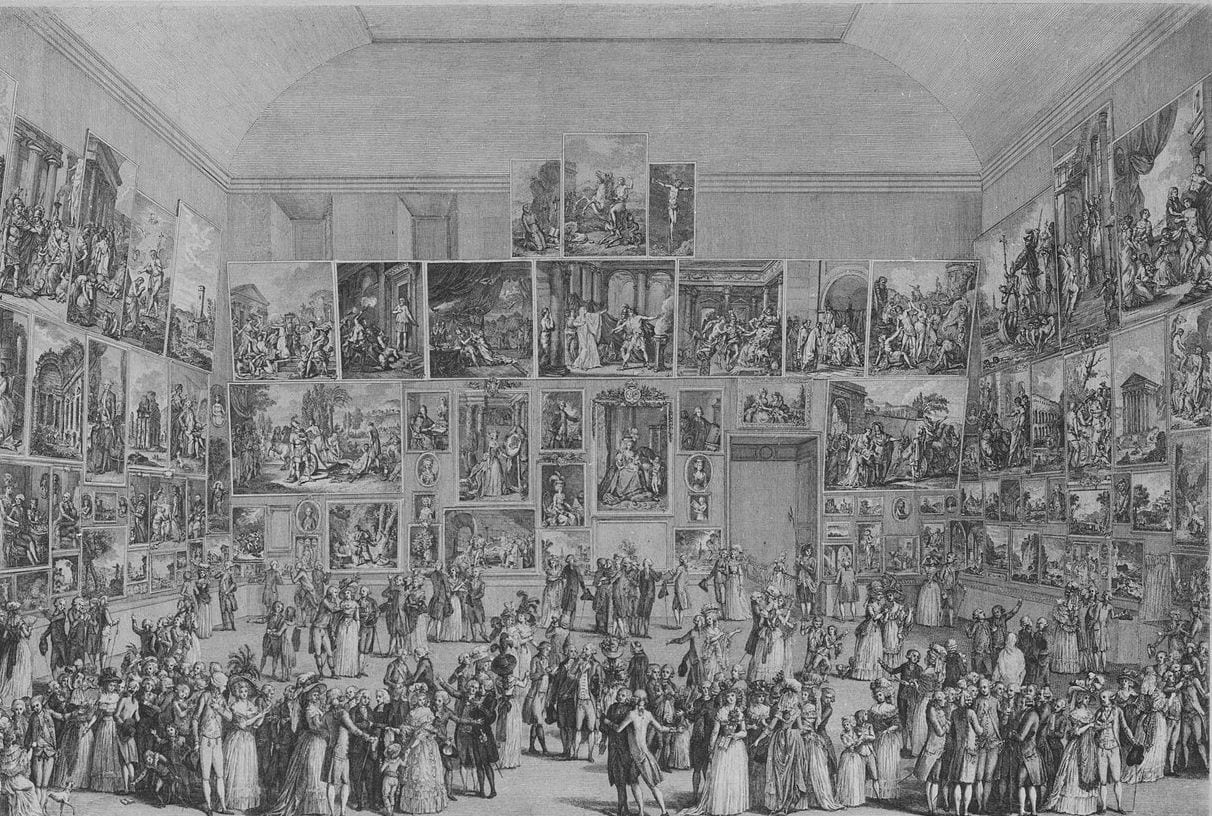
Before 1850, everyone agreed what painting was for. It opened a window onto a recognizable world — gods, heroes, saints, history — rendered with idealized bodies, believable space and a finish that hid every brushstroke. David’s Oath of the Horatii is that ideal made law: three brothers throw out their arms to swear on the swords their father holds aloft, the architecture recedes in textbook perspective, the drama crystal clear.
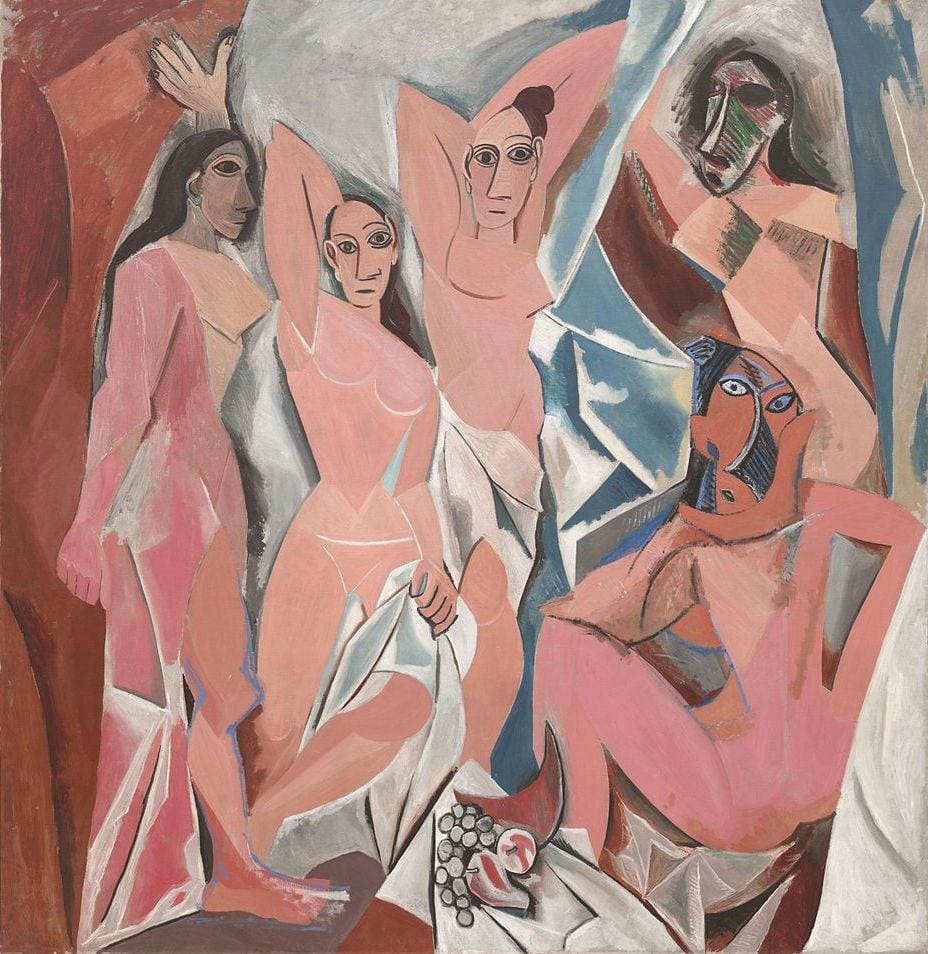
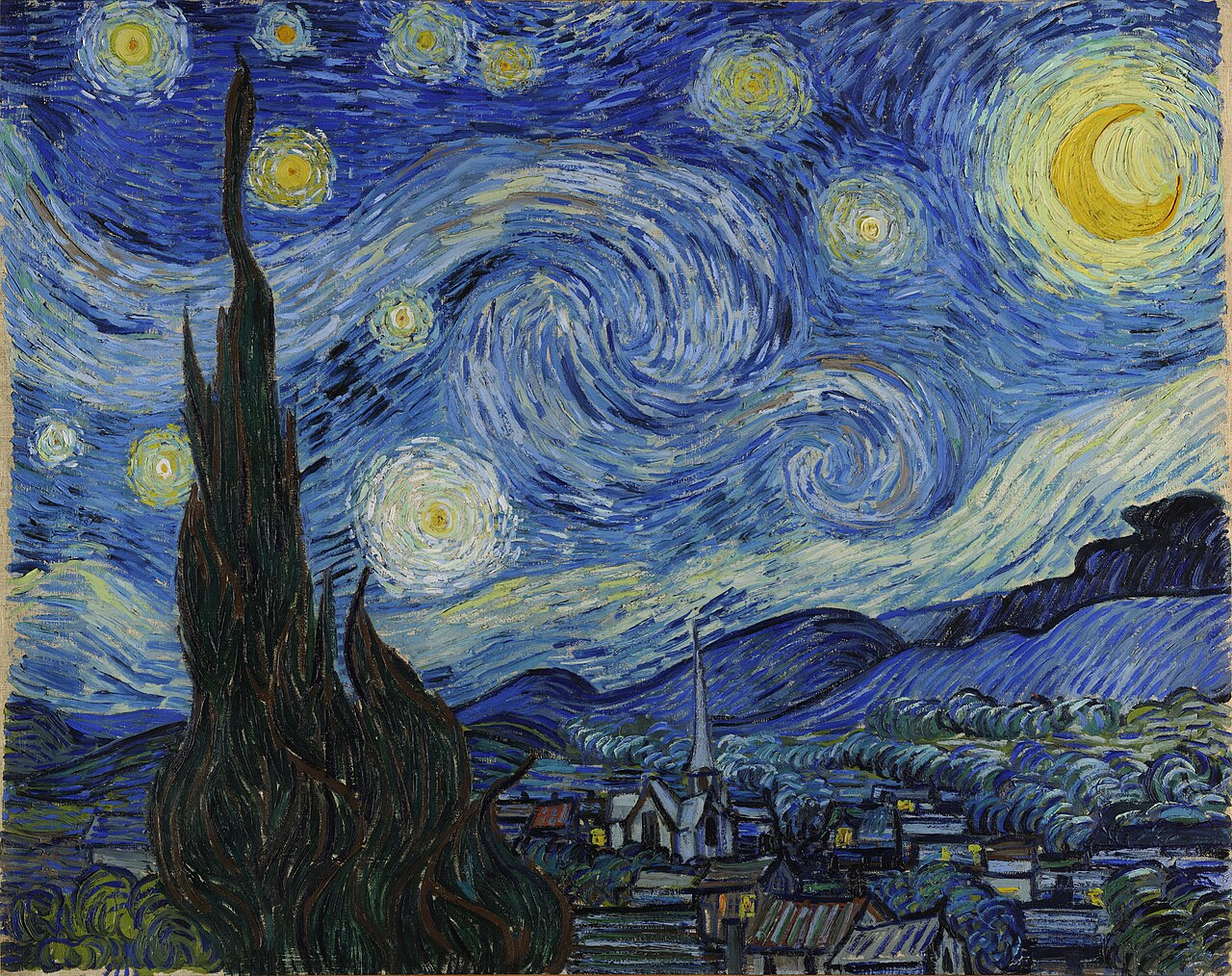
The modern era is the slow-motion demolition of that agreement. Realism put real labourers where the gods had been; Impressionism dissolved solid form into light; Cubism broke the single viewpoint; then Kandinsky took the last step and dissolved the subject altogether. The boats, waves and apocalyptic riders he began with vanish into pure colour and line — a picture that refuses to be a window onto anything but itself.
That is the thread that makes 1850–1970 one era and not a string of unrelated styles: each movement attacks a different rule of the old picture — its subjects, its space, its surface, its very duty to depict — until almost nothing of the window is left. Modern art isn’t a single look. It is the century painting spent taking itself apart.