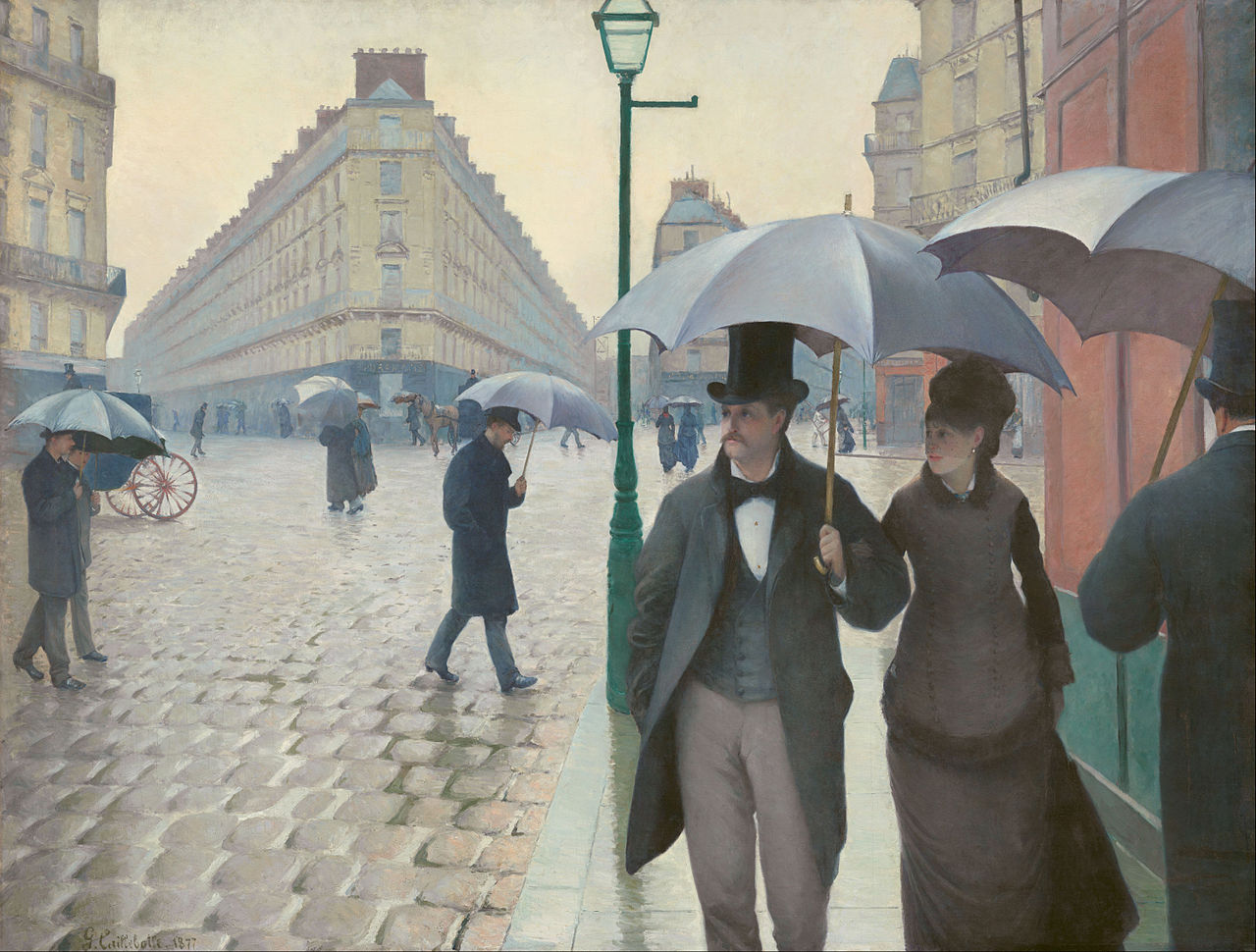
In the Paris of the 1870s these were the canvases the jury rejected and the public came to laugh at — pictures that looked unfinished, smeared, dashed-off, wrong. Their makers were a quarrelsome cooperative who never agreed on a creed, never signed a manifesto, and got their very name from a man making fun of them. This is how a generation that could see the brand-new modern city — its boulevards, railway stations and Sunday boating parties — fought a decade-long war with the official machine that refused to let them paint it, invented a way of putting light itself on canvas, and then, having finally won, woke to find a younger painter had hung the picture that made them, suddenly, look like the past.
Realism had already won the subject fight a generation earlier — it dragged ordinary modern life up onto the big canvas and made it a fit thing to paint. Impressionism’s break is a different one, and a subtler one: a break over three things the academy held sacred — finish, light, and time. Set the Salon’s poreless goddess beside Monet’s harbor and you can watch all three quarrels happen at once.
Start with finish and the stroke. The academic surface is licked — worked and reworked until the paint is seamless and the hand that made it has vanished, so you see a window onto a world, never a layer of pigment. Monet does the opposite on purpose: he leaves the stroke showing, so you can read the speed of his hand in every dab and the sun is plainly a few licks of loaded paint. Then light and color. The academic flesh glows under a soft, even, invented studio light, and its shadows are darker tones of the same skin color; Monet paints the light that was genuinely landing on the water at that one dawn, and builds his shadows from color — blues and violets — not from black. Local color, the label color, gives way to the color that light actually makes.
And finally time, the deepest break of all. The academic picture is outside of time: a posed, eternal, idealized tableau no clock ever ticked through. Monet paints a single passing instant — this dawn, this minute, the mist about to lift — and paints it fast enough to catch it before it goes. The honest caveat is that one limb of this break is not universal: most of the Impressionists abandoned the studio for the riverbank to catch that light in the open air, but Degas never did — he kept the studio and broke the academy on subject, cropping and the caught modern instant instead. So the break is light, finish, and the fleeting moment; open-air painting is its strongest single limb, not the whole of it. What was universal was the verdict the academy handed down on all of them in one word — unfinished — which the Impressionists decided was the truest thing they could be.
Most of the movements in this era arrive with a manifesto in hand — a printed declaration in which the artists state, in plain language, what they are for and what they are against. The Realists had one (Courbet’s catalogue statement, run up like a flag). The Futurists, the Surrealists, nearly everyone who follows, would publish a creed before they published a second painting. Impressionism is the great exception. There is no Impressionist manifesto: no founding document, no signed program, no agreed list of beliefs — because there was never a single agreed belief to write down. They were a cooperative bound together by what they were against (the Salon’s locked door) far more than by any shared doctrine, and they couldn’t even hold that coalition together for eight shows running.
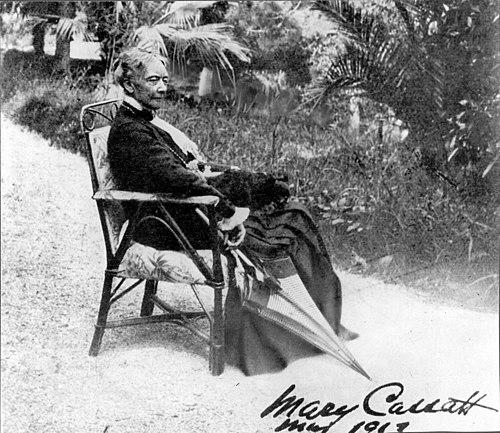
And so the one thing they all share — their name — was not chosen by them at all. It was thrown at them by a hostile critic as a joke, and they shrugged and kept it. A movement with no creed, named by an enemy, held together by exclusion rather than by faith. The thing that should have been a weakness — no party line, no orthodoxy — turns out to be why the work is so various: a Monet harbor, a Degas rehearsal room, a Morisot nursery and a Cassatt mother and child barely look like members of the same school, because there was no school, only a shared front in a long argument with a jury.
The closest anyone came to writing the creed they never wrote was a sympathetic outsider. In 1876, to coincide with the second exhibition, the critic Edmond Duranty — a Realist novelist, a Café Guerbois regular and a close friend of Degas — published a slim pamphlet called La Nouvelle Peinture (“The New Painting”): the first serious attempt to explain these painters to a baffled public. Duranty argued that the new art should abandon the studio-isolated, decorative figure posed like an ornament, and instead show people inseparable from their real surroundings — that, set among the things of a real life, even a person’s back ought to betray a temperament, an age, a social class. But the painters never signed it, never commissioned it, never adopted it; it was Duranty’s own essay, in his own voice, and tellingly he never once used the word “Impressionism.” The nearest thing Impressionism has to a manifesto is a pamphlet the Impressionists didn’t write, didn’t sign, and which pointedly declined to call them what the world would.