CivWarArtMusic
MODERN · MOVEMENT · 5 OF 10

Cubism

1907–1922 · 15 years
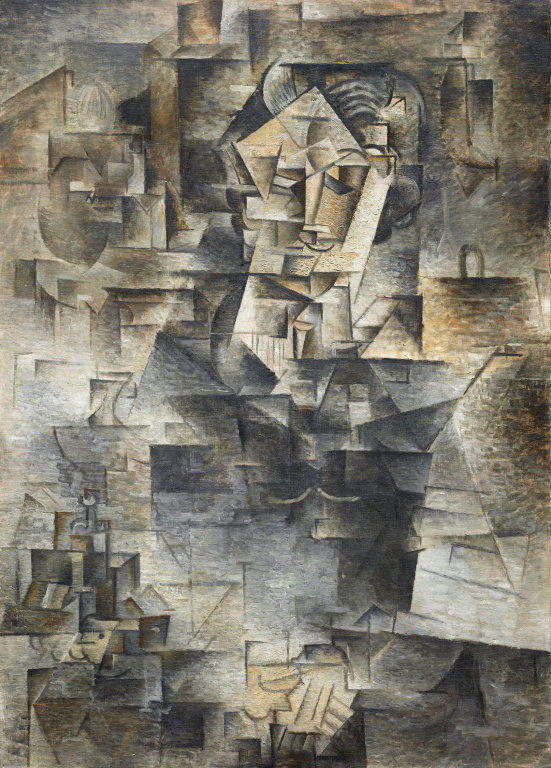
Picasso · Girl with a Mandolin (MoMA) · Portrait of Kahnweiler (Art Institute of Chicago) · 1910

For about a decade, two painters in Paris worked so closely that they had to sign the backs of each other’s canvases just to remember whose was whose. What they did, in essence, was repeal the law of single-point perspective that had ruled European painting since 1420. The picture stopped pretending to be a window.

Read the Cubism story6 chapters · 1907–1922
Why it was a break
vs
Before · Ingres, La Grande Odalisque (1814)
What "a nude" had meant for centuries: an idealized body seen from one fixed spot through an invisible window, the brushwork sanded to glass.
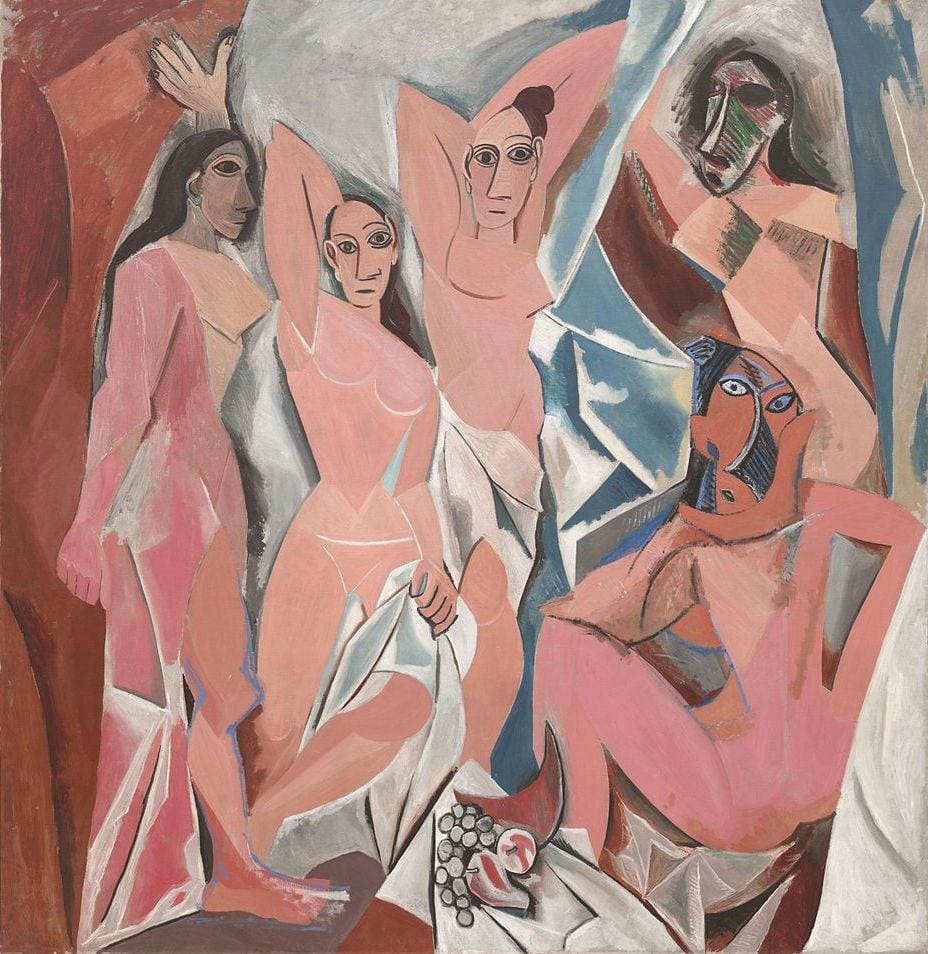
After · Picasso, Les Demoiselles d’Avignon (1907)
What Picasso did instead: five women built from jagged planes and mask-faces, shown from several angles at once, the deep illusionistic space flattened against the surface.

For five hundred years a painting was a window. You stood in one place, the picture opened onto a believable space, and the painter’s job was to hide the seams — to make a flat cloth read as a room you could step into. Ingres’s odalisque is that tradition at its most polished: one viewpoint, one idealized body, every brushstroke buffed away.

Les Demoiselles d’Avignon smashes the window. The five figures are assembled from hard angular shards; two of the faces are African masks; and bodies are shown from several positions at the same time — a back and a face that no single observer could ever see together. The illusion of depth is gone, pressed flat against the canvas.

That is why Cubism is a new movement and not a new style. It didn’t change how the window looked — it threw the window out. Once a painting could hold many viewpoints at once and admit it was a flat made thing, the single fixed eye that had governed Western art since the Renaissance was finished, and nearly every abstraction that followed walked through the hole Picasso and Braque tore open.

No manifesto

Cubism is the great exception — the movement with no manifesto at all. The two men who invented it, Picasso and Braque, published almost nothing: no program, no slogans, barely an interview. They worked in deliberate near-silence, roped together like mountaineers, and let the paintings do the arguing.

The theory came from other hands entirely. The first real book on the movement, Du Cubisme (1912), was written by two second-wave painters, Albert Gleizes and Jean Metzinger — not by Picasso or Braque. The poet and critic Guillaume Apollinaire, Cubism’s loudest champion, followed with Les Peintres cubistes (1913). And a whole public-facing group, the Salon Cubists of the Section d’Or, exhibited and explained themselves in the open while the two inventors stayed cagey.

So Cubism’s “manifesto” is really a book by its followers and an essay by a friendly critic — the movement explained from the outside in. The silence is the point: Cubism made its case in pictures, not paragraphs.

Read Du Cubisme (Gleizes & Metzinger, 1912)
How the influence flowed
Grew out of
Cézanne
gave: form built from faceted planes
African masks
gave: flat, frontal geometry
Post-Impressionism
gave: structure over appearance
Edwardian Paris
gave: dealers, rivals, an audience
Cubism1907–1922
Led to
Futurism
took: fractured planes, set in motion
Constructivism
took: geometry as structure
Abstract art
took: leaving the subject behind
Bauhaus
took: pure geometry, into design
Cubism took Cézanne’s faceted space and the flat planes of African masks, broke the single-viewpoint window once and for all, and handed that break on to nearly every abstract movement that followed.
The details
15 yrs
Span
Paris
Centered on
vs
pioneers
The pioneers
Picasso · Braque
Two studios in Montmartre. Daily visits. Joint shows. They invented it together and then drifted apart in the war.
salon
The Salon Cubists
Gleizes · Metzinger · Léger · Delaunay · Gris
A larger second wave that showed at the Salon des Indépendants. They wrote the manifestos. The pioneers didn’t join.
Cubism artists
Picasso
Pioneer
Braque
Pioneer
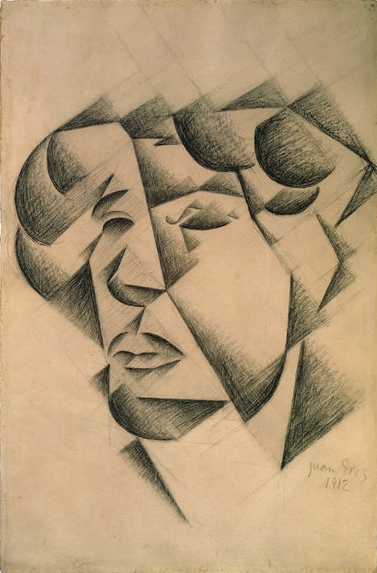
Juan Gris
Synthesist
Léger
Salon cubist
Delaunay
Orphist
Metzinger
Theorist
Meanwhile, elsewhere
Other movements in the same years
1909 · Milan
Futurism
Marinetti publishes the Futurist Manifesto in Le Figaro.
1911 · Munich
Der Blaue Reiter
Kandinsky, Marc, Münter form a group around color, music and abstraction.
1913 · St Petersburg
Suprematism
Malevich is heading toward the Black Square.
1916 · Zürich
Dada
At the Cabaret Voltaire, a war refugee scene mocks the very idea of meaning.
9 featured works
The full canon · 30 works
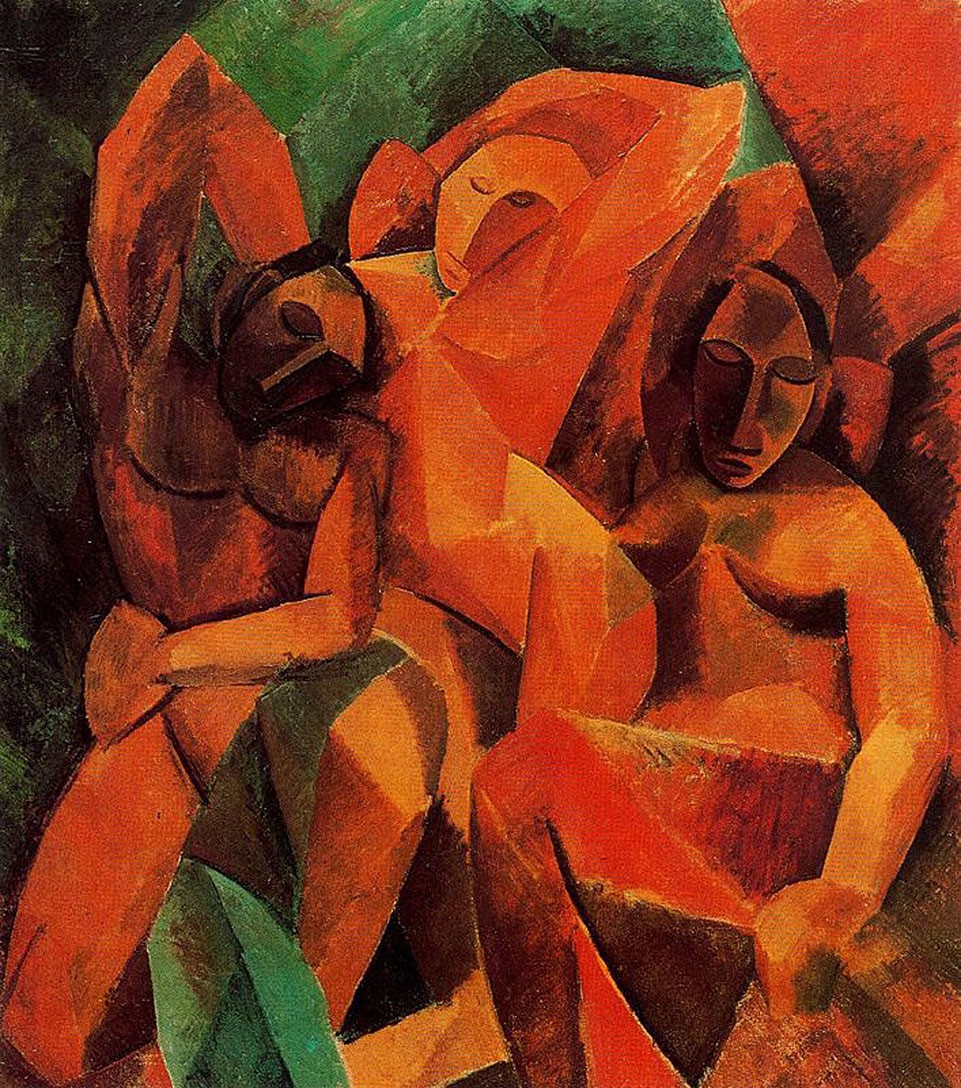
1908Three WomenPicasso
1909Houses on the Hill, Horta de EbroPicasso
1910Violin and CandlestickBraque
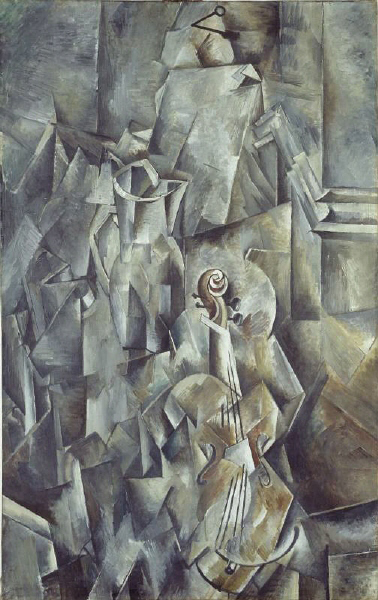
1910Violin and JugBraque
1911AbundanceLe Fauconnier
1911The AccordionistPicasso
1911The Eiffel TowerDelaunay
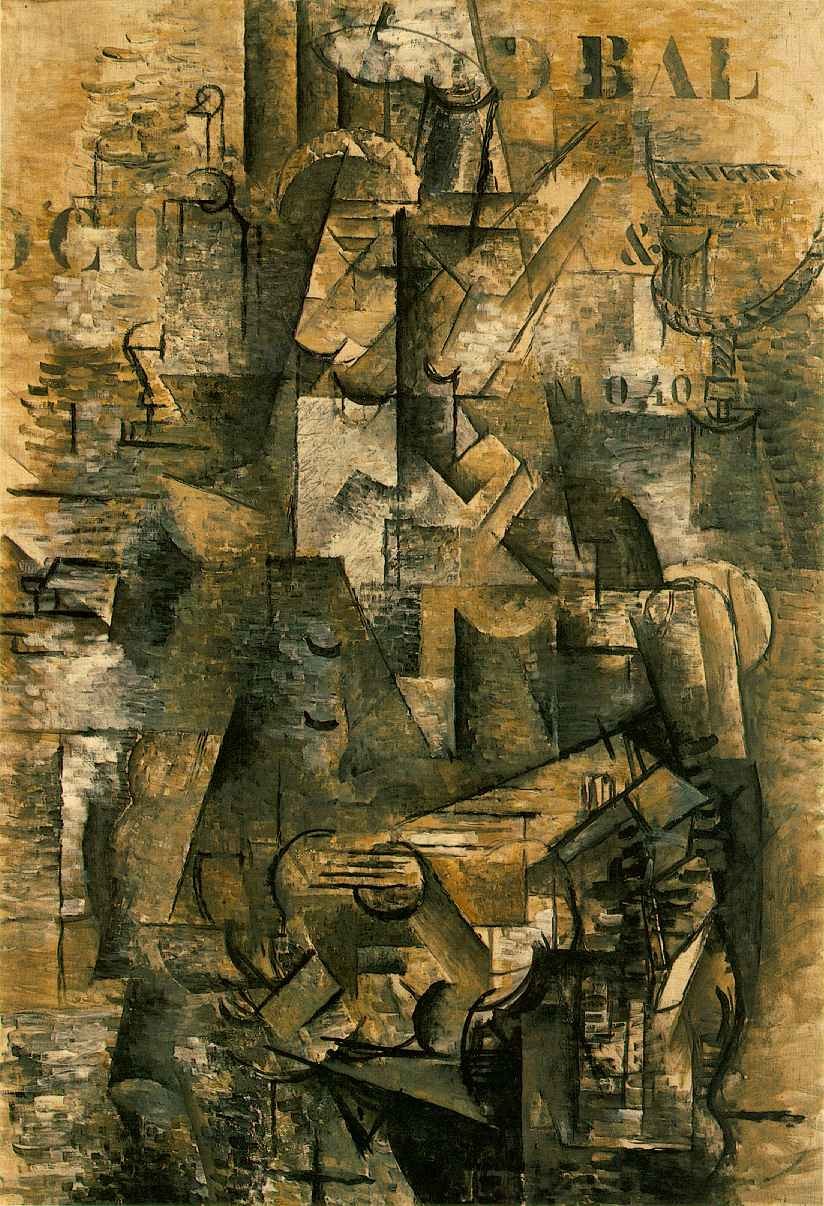
1911The PortugueseBraque
1912Homage to Pablo PicassoGris
1912Man on a BalconyGleizes
1912The City of ParisDelaunay
1912Woman in BlueLéger
1913Contrast of FormsLéger
1913The Cardiff TeamDelaunay
1913UdniePicabia
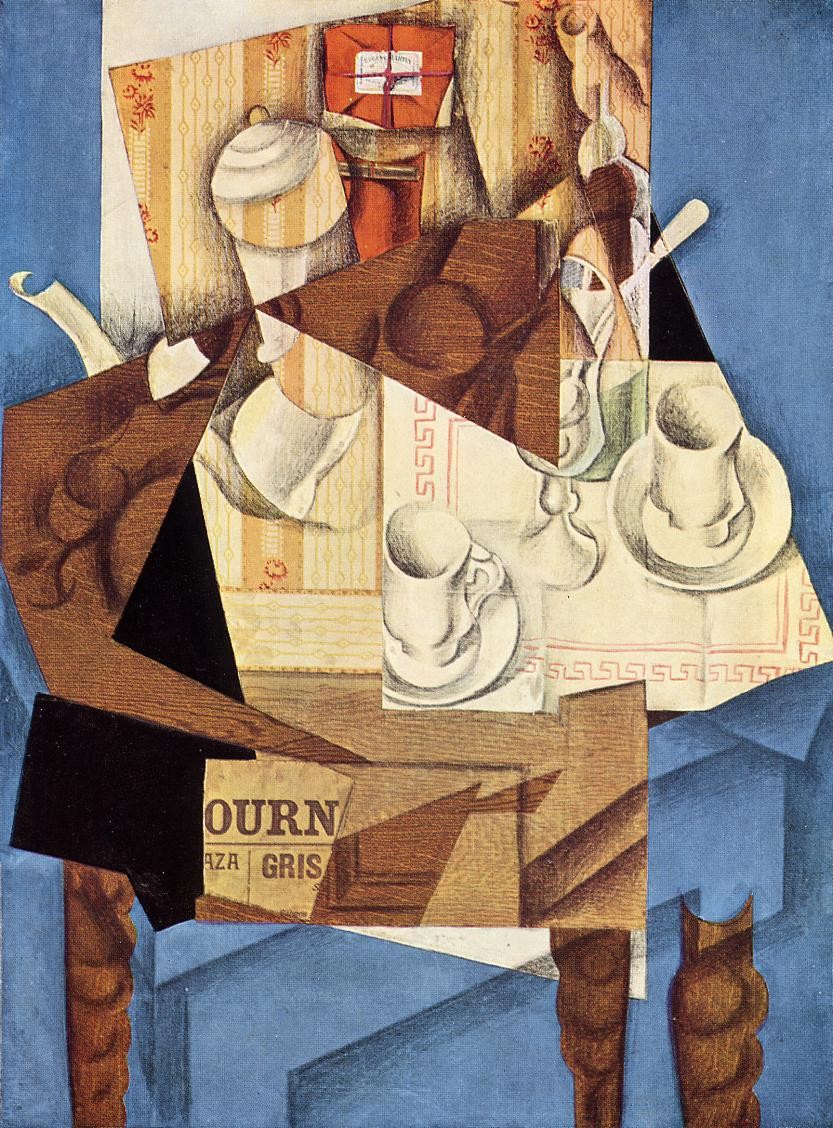
1914Breakfast (Le Petit Déjeuner)Gris
1914The SunblindGris
1915Man with a GuitarLipchitz
1921Three MusiciansPicasso