“Post-Impressionism” is one of the strangest labels in art history, because the people inside it were not a movement, did not meet, did not write a manifesto, and were mostly dead by the time anyone called them this. Roger Fry — an English critic with a London gallery to fill in the autumn of 1910 — needed an umbrella name for a roomful of French pictures that came after Impressionism but weren’t Fauvism or Cubism yet. He picked Post-Impressionists almost on the fly, and the name stuck to five very different painters working in five different cities, mostly in disagreement with one another, all of them answering Impressionism in their own way. Cézanne wanted weight. Van Gogh wanted feeling. Gauguin wanted flat color and symbol. Seurat wanted science. Toulouse-Lautrec wanted the modern dance hall. Five answers, one room.
Impressionism had taught a generation to paint light — the flicker of shadow on snow, an orange sun smearing across a gray harbor at dawn. It put the instant on canvas, and it did it brilliantly. But the instant is weightless. It doesn’t stay. By the late 1880s the younger painters could see something the elders had missed: the architecture that lasts, the feeling of a picture, the thing it is actually about. The break is not a new technique. It is the return of everything Impressionism had let go of.
Set Monet’s late Water Lilies beside Cézanne’s Mont Sainte-Victoire and the argument is visible in two glances. Monet has dissolved a pond into reflections — sky and lily and water bleed into each other; there is no edge, no architecture, almost no figure. Cézanne, the same years, is doing the opposite in front of his mountain — building it back together out of small blocky strokes of color set side by side like masonry, until the canvas reads as planes of weight before it reads as landscape. The mountain refuses to dissolve.
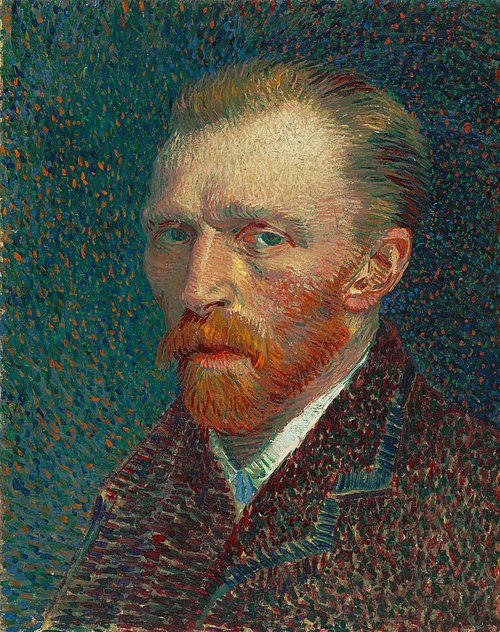
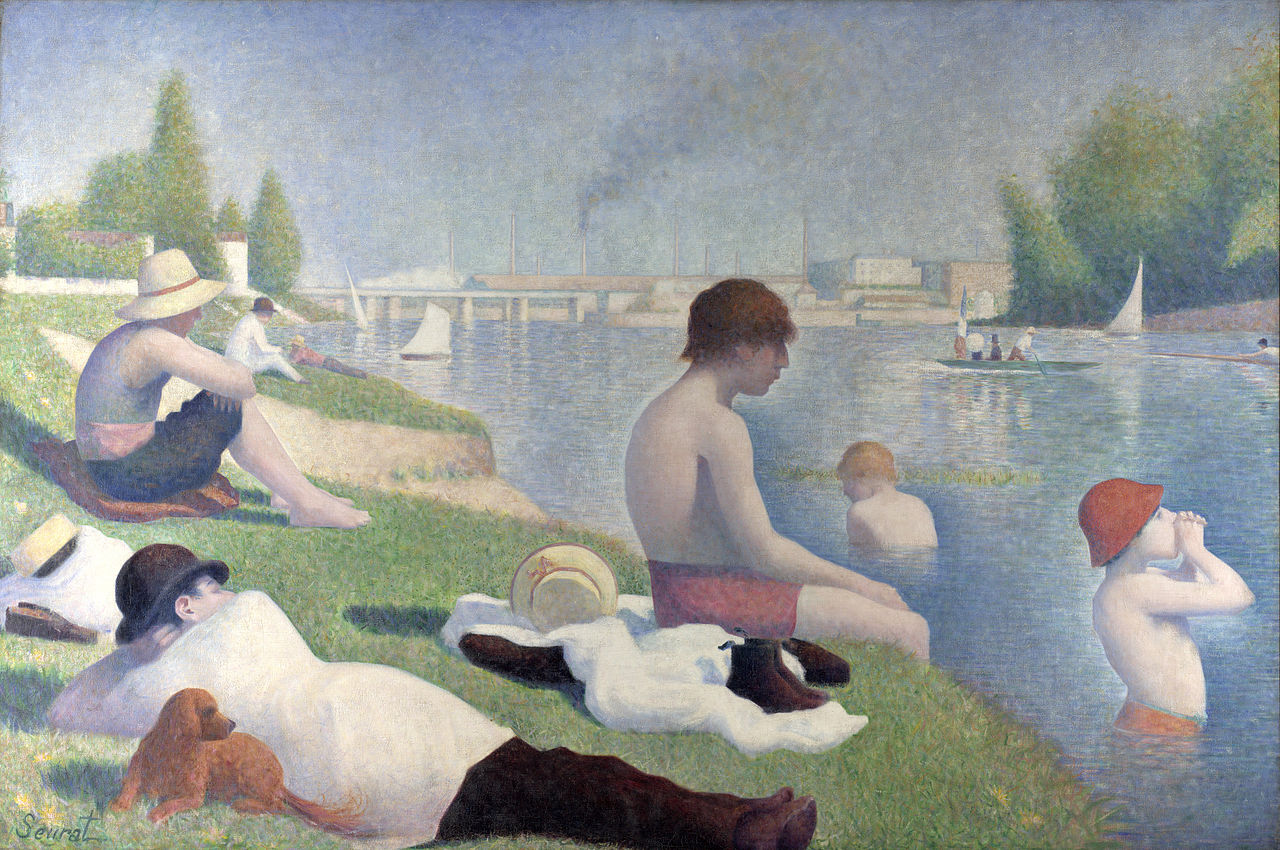
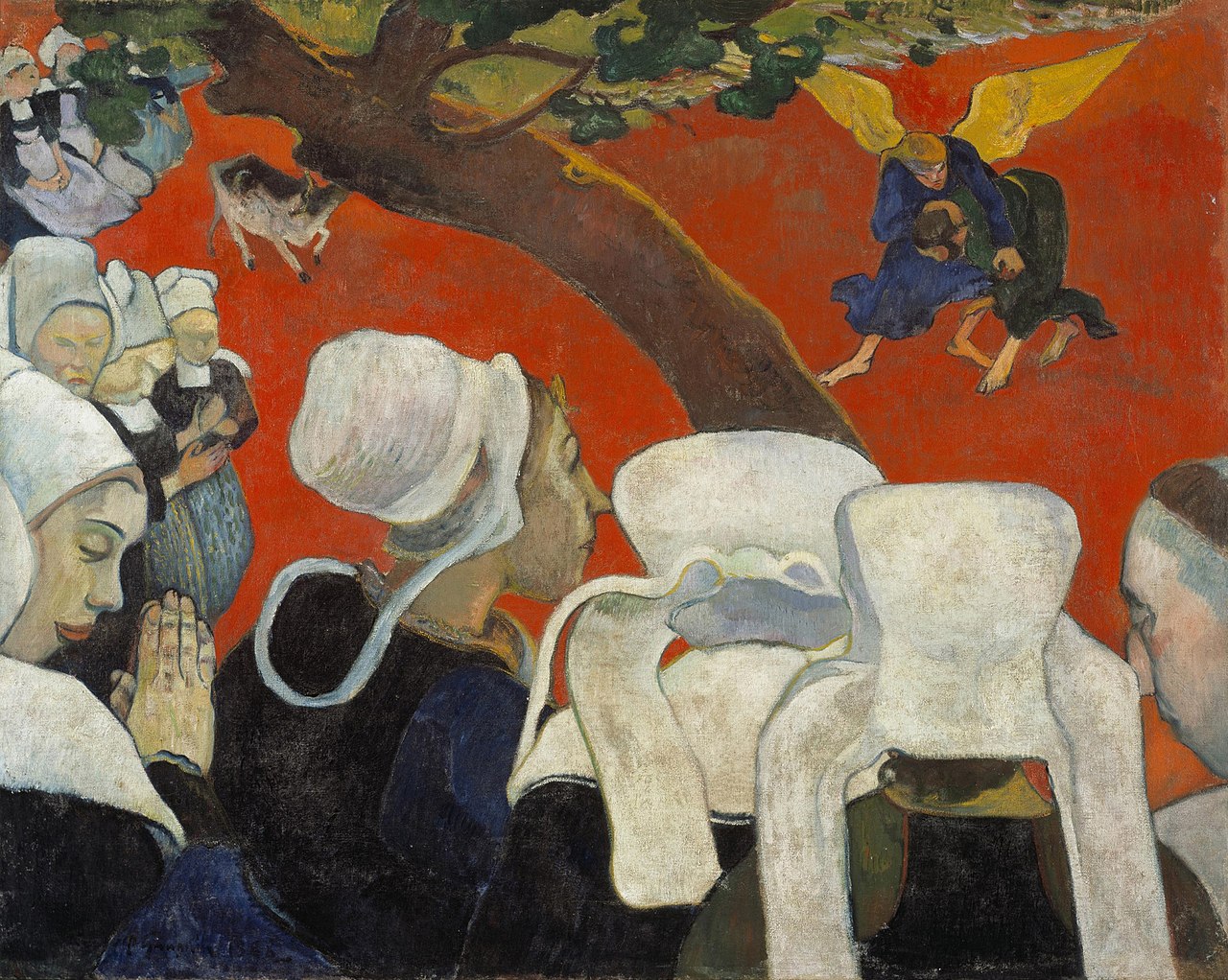
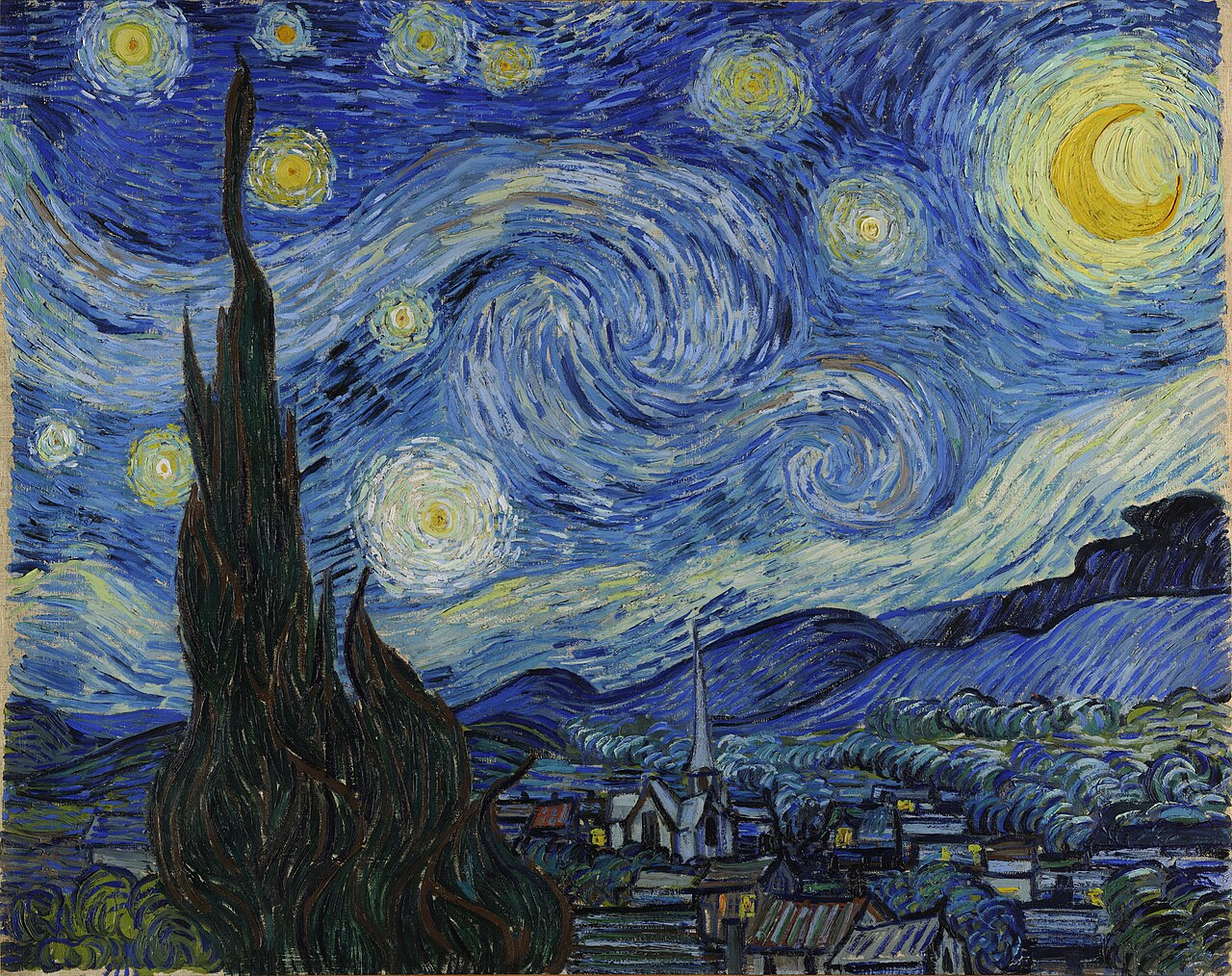
And it isn’t only Cézanne. The objection ran four ways, one anchor against each. Cézanne wanted weight — a mountain has weight; light passing over a mountain does not. Van Gogh wanted feeling — a wheatfield is yellow at noon, but what does that yellow do to the man standing in it? Gauguin wanted meaning — a Breton peasant in church doesn’t see a Bible story; she imagines one, and how do you paint that? Seurat wanted method — the Impressionists were eyeballing optical mixing by instinct; what if you did it properly, by formula? Lautrec wanted the modern night — not Renoir’s sunlit Sunday afternoon but the same dance hall at midnight under flat green gaslight. Five answers to one question, all of them refusing to settle for what the eye alone could catch.
Post-Impressionism is the great absence among the era’s manifestos — there isn’t one. The five painters Roger Fry put on the wall in 1910 never met as a group, never signed a program, never even used the word about themselves. Cézanne worked alone in Provence; Van Gogh in Arles, Saint-Rémy, Auvers; Gauguin in Pont-Aven and then Tahiti; Seurat in Paris; Lautrec in Montmartre. They mostly never met (Van Gogh and Gauguin at the Yellow House in 1888 is the famous, terrible exception). By the time anyone called them a movement, four of the five were already dead.
So the “founding documents” of Post-Impressionism are surrogates, written for it from the outside. The first is Roger Fry’s catalogue for Manet and the Post-Impressionists at the Grafton Galleries (London, 8 November 1910 – 15 January 1911) — drafted at speed with Desmond MacCarthy as a defense of unfamiliar pictures, the page that named the movement and stuck the name. The second is a private letter Cézanne wrote to a young painter called Émile Bernard on 15 April 1904, kept now at the Courtauld in London. In one sentence — “treat nature by means of the cylinder, the sphere, the cone” — Cézanne handed Picasso, Braque, and a century of art-historical surveys the line they would quote when they needed to make him the father of modern art.
Neither was meant as a manifesto. Fry’s catalogue is a critic’s defense of a show; Cézanne’s letter is a sketcher’s advice to a younger painter. But between them they are what Post-Impressionism has — a critic gave the room its name and a private letter gave it its theorem, and the five painters who were nominally inside it had nothing to say about either.