In the late summer of 1862, the Civil War was going badly for the United States, and Robert E. Lee (South) decided to make it worse. For more than a year the fighting in the East had been a war fought on Southern soil, with Northern armies grinding into Virginia and getting thrown back out again. Lee had just broken one of those armies near Washington. Now, instead of waiting for the next blow, he did something audacious: he marched his Army of Northern Virginia north, across the Potomac River and into Maryland. It was his first invasion of the North.
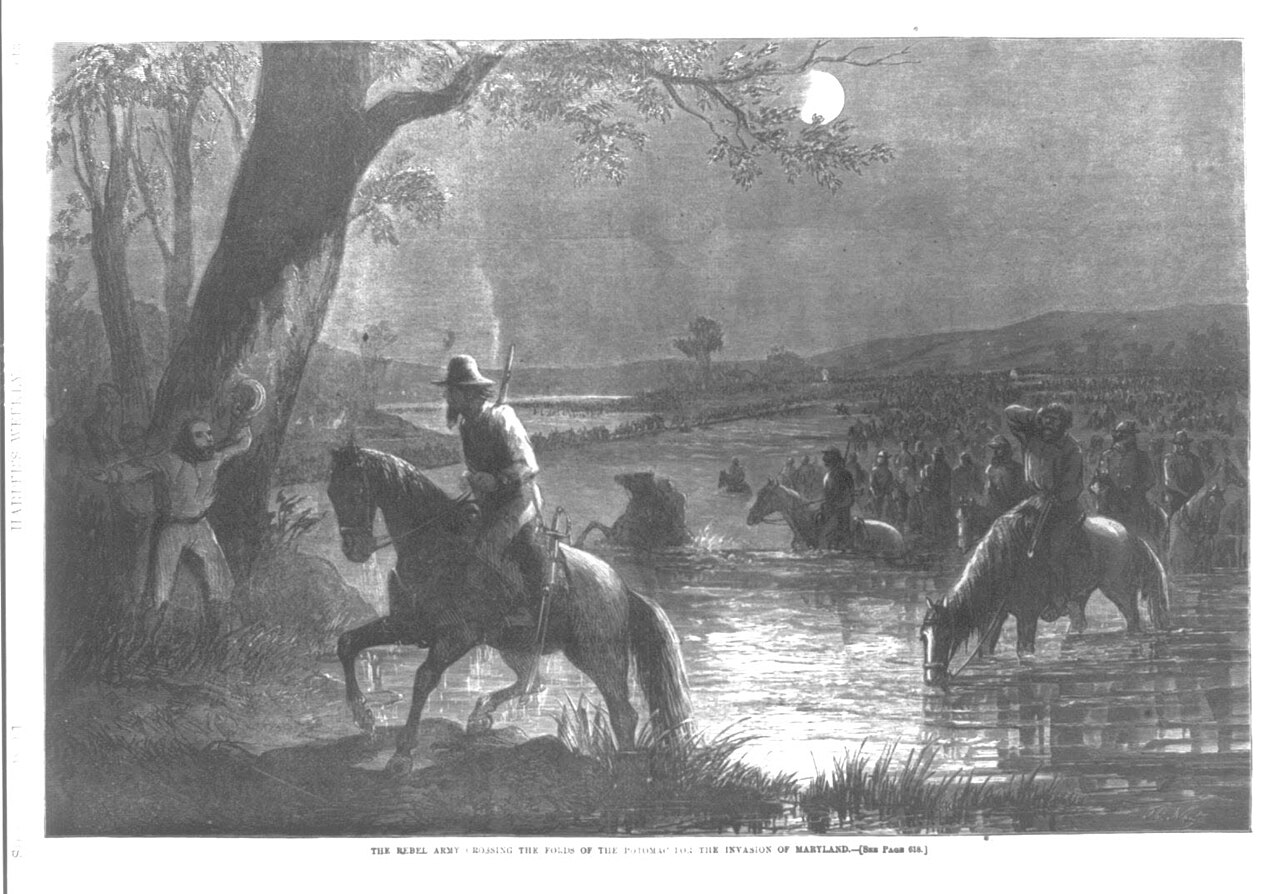
The gamble was about more than ground. A Confederate victory on Northern soil might convince Britain or France to formally recognize the Confederacy as a country — to treat the South as a real nation rather than a rebellion. Recognition could mean trade, money, maybe even intervention. A loud win above the Potomac might also break Northern nerve in an election year. Lee was not just raiding Maryland. He was reaching for the things that win wars without being battles.
The two armies
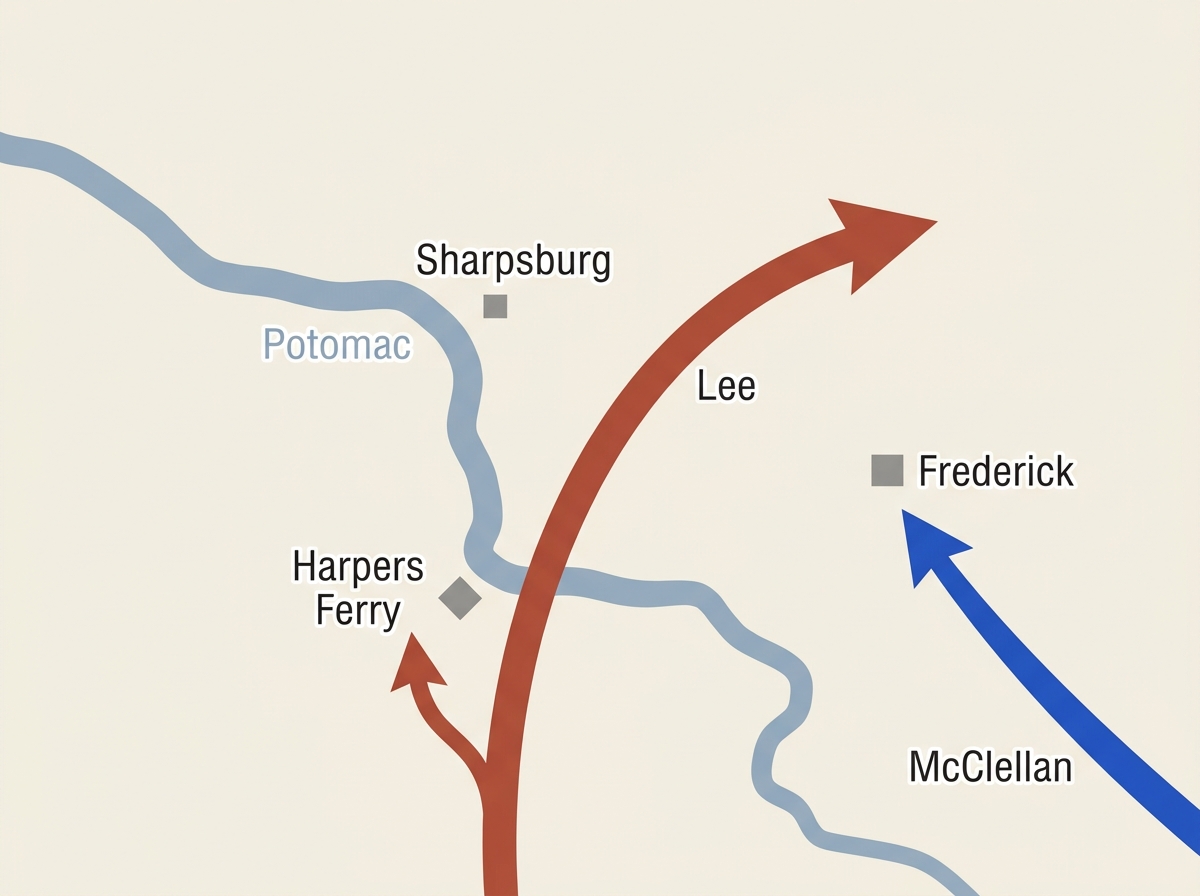
The man sent to stop him was Maj. Gen. George B. McClellan (North), commander of the Army of the Potomac. McClellan was a gifted organizer and a beloved leader of men, and he had one defining flaw that decided everything that followed: he would bring roughly 87,000 men toward this fight against Lee’s 38,000 — better than two to one — and spend the whole campaign convinced he was the one outnumbered. The bigger army, certain it was the smaller, was the central fact of the day.
To pull off an invasion with an army half the size of his enemy’s, Lee did the riskiest thing a general can do in front of a stronger foe: he split it into pieces, sending part of his force to capture the Union garrison at Harpers Ferry while the rest moved on. It was a bet that McClellan would be too slow and too cautious to catch the scattered halves before they reunited. Given the man he was facing, it was a reasonable bet.
The three cigars
Then the war handed McClellan a miracle. On September 13, near Frederick, Maryland, a Union soldier named Barton Mitchell of the 27th Indiana was resting in a field a Confederate unit had just left when he noticed something on the ground: three cigars, wrapped in a piece of paper. The cigars were a nice find. The paper was the war. It was a copy of Special Order 191 — Lee’s own campaign orders, laying out exactly how he had divided his army and where each piece was going.
Generals dream of this and never get it. McClellan now knew his enemy was split, scattered, and beatable in detail — destroy one piece before the others could rejoin. He is reported to have said it himself:
“Here is a paper with which if I cannot whip Bobbie Lee I will be willing to go home.”
He had the map to the other man’s army. Then he sat on it.
True to form, McClellan waited roughly eighteen hours before he moved. It was enough time for Lee to learn the order had been lost and to start pulling his army back together along a low ridge near a town called Sharpsburg, behind a winding stream called Antietam Creek. The once-in-a-war chance was still a chance — McClellan still had the bigger army and the high ground of knowledge. But the margin had narrowed from “catch them scattered” to “catch them gathering.” On the morning of September 17, the two armies stood across Antietam Creek from each other, and the bloodiest day in American history began.