Start with the cost, because the cost is the story. In one day — September 17, 1862 — the two armies suffered about 22,726 casualties, killed, wounded, and missing. It remains the bloodiest single day in American history, and nothing has come close in the more than a century and a half since. The Union counted roughly 12,410 of those, with 2,108 men killed; the Confederates about 10,316, with 1,547 killed. Put another way, around a quarter of every Union soldier engaged and nearly a third of every Confederate became a casualty in the space of one September day. These were not abstractions. They were the men who had been standing in Miller’s Cornfield at dawn and lying in it by breakfast, the 2,200 lost in the West Woods in twenty minutes, the dead heaped in the Bloody Lane until you could have walked its length without touching the ground.
The dead would not stay invisible
For the families up North, the war had always happened somewhere else, described in newspaper columns and casualty lists — names in small type, a war you read about. Antietam ended that. On September 18 and 19, two photographers named Alexander Gardner and James Gibson, working for the famous studio of Mathew Brady, walked the field before the dead were buried and photographed the bodies exactly as they had fallen. In October, Brady put the pictures on display in New York under the title “The Dead of Antietam.” It was the first time the American public had ever seen photographs of battlefield corpses.
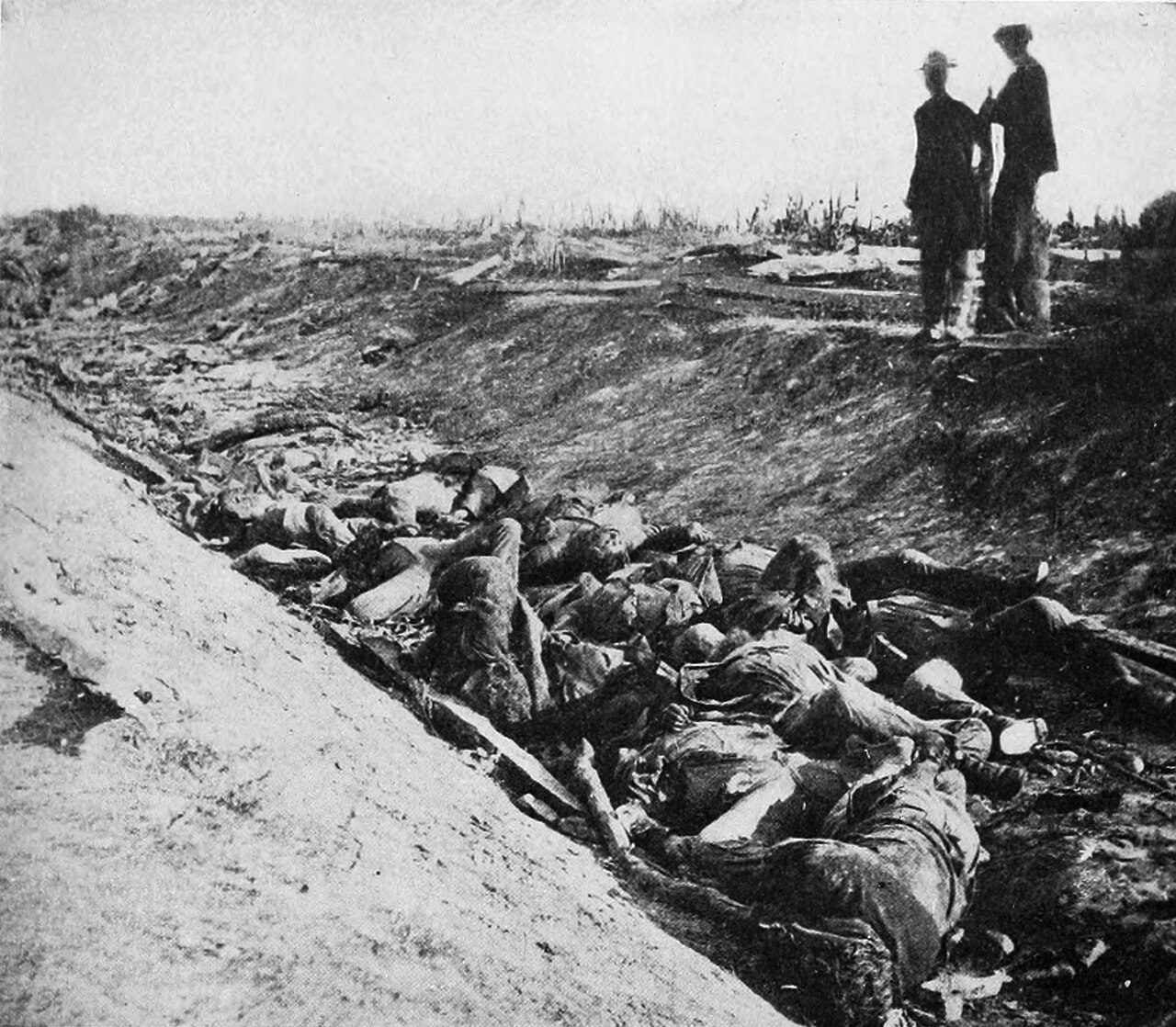
People filed past the images in stunned silence. A war that had been words became, suddenly, faces and bodies. The New York Times put it plainly:
“Mr. Brady has done something to bring home to us the terrible reality and earnestness of war. If he has not brought bodies and laid them in our door-yards and along the streets, he has done something very like it.”
The dead in those frames were somebody’s son, and now everyone could see it.
Lee slips away, McClellan stays put
The morning after the slaughter came up over a field that had not moved an inch. The two armies were still there, what was left of them, standing in the same ground they had ruined the day before and looking at each other across it. The dead lay between them in the corn and the lane and the woods. Neither side attacked. Lee (South) held his line all day with his back to the Potomac and nothing behind it — no reserves anywhere in the world, his whole army spent — and simply waited, daring McClellan to come and finish what he had started. McClellan (North), who still had Porter’s untouched corps and thousands more men he had never sent in, did not come. He let the day pass. That night Lee quietly slipped his entire army back across the river into Virginia, and McClellan let him go without a fight.
It was, in the end, a strategic victory for the United States: Lee’s invasion of the North was turned back, and the Confederacy’s bid for the foreign recognition that might have saved it was broken. But it was a maddening, half-finished victory. Lee’s army — the thing McClellan had held the orders to destroy and the reserves to destroy it with — escaped intact to fight for nearly three more years. And the cause that army carried, whatever the courage of the men in its ranks, was at bottom the preservation of slavery — the very thing the day’s outcome was about to start undoing. In November, his patience finally gone, Lincoln (North) relieved McClellan of his command.
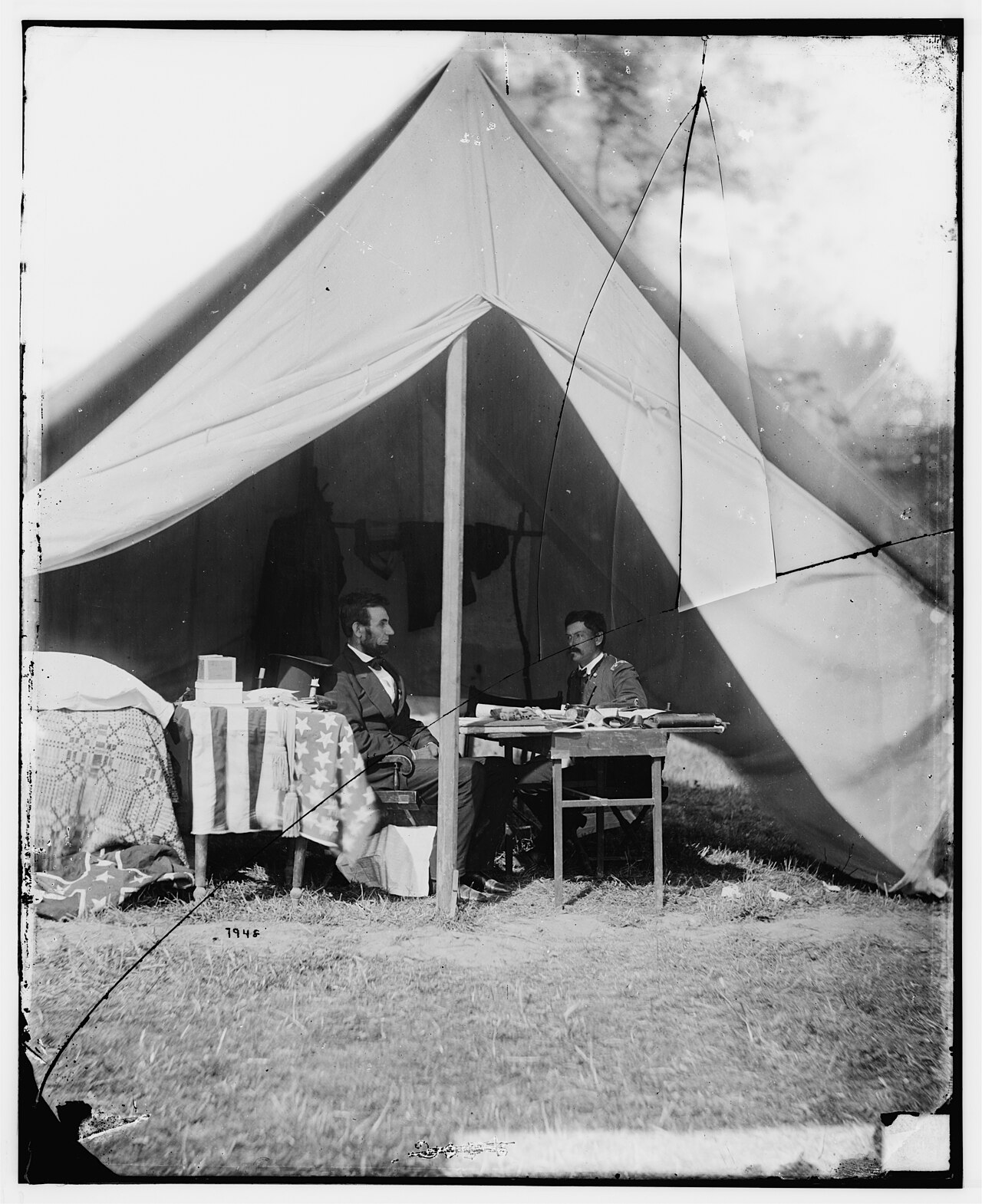
The man who could organize an army better than anyone could never quite bring himself to spend it.
What the day was for
The deepest meaning of Antietam wasn’t decided on the field at all. It was decided in Washington, five days later. Lincoln had been waiting all summer for a victory — any victory — to give him the standing to act, and the turning-back of Lee’s invasion was close enough. On September 22, 1862, he issued the preliminary Emancipation Proclamation, putting the South on notice that the enslaved people in the rebelling states would be declared free.
In a stroke, it changed what the war was about. A fight to hold the Union back together became, openly and on the record, a fight to end slavery. And it slammed a door that had stood worryingly open: no European power could now step in on the side of the Confederacy without standing up, in front of the whole world, for slavery against a nation fighting to abolish it. Britain and France stayed out. The bloodiest day in American history had bought, at a price almost too large to write down, the moment the war became a war for freedom.