After the bomb
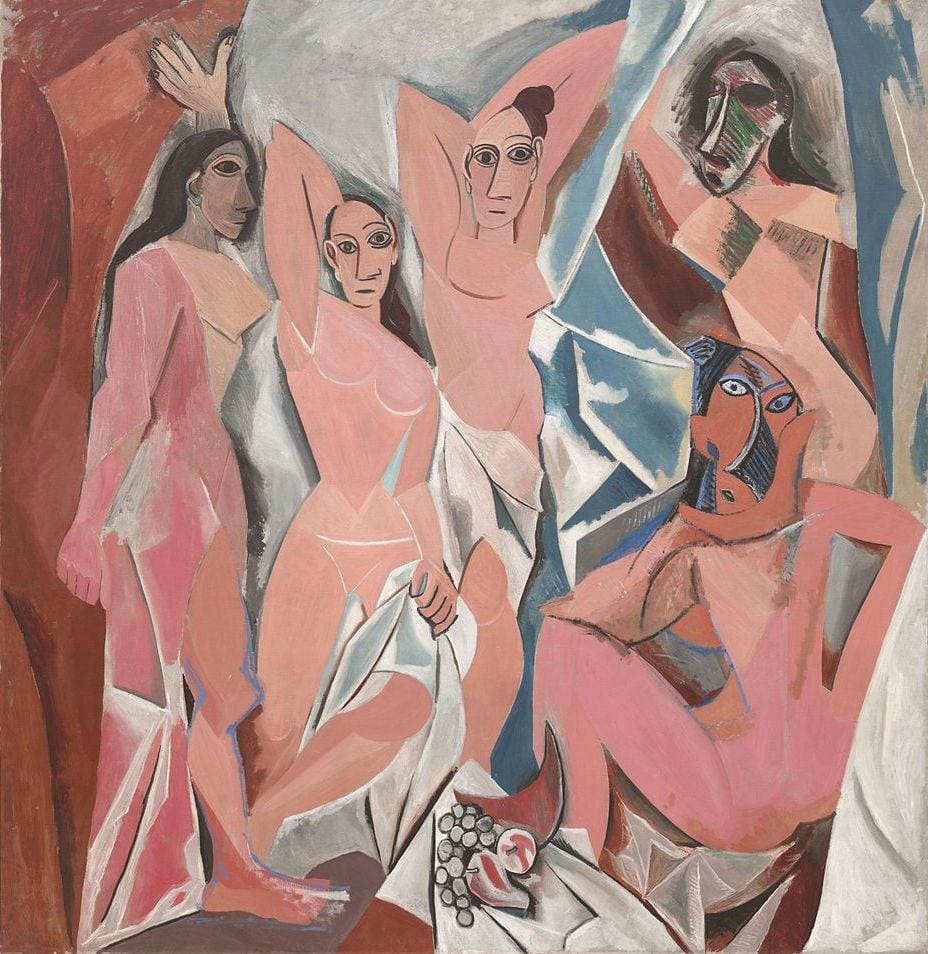
Late in 1907 Picasso rolled up Les Demoiselles d’Avignon, the jagged, savage canvas his own friends had recoiled from, and stood it against the wall. He was 26. He did not spend the next year defending it. He spent it working out what the explosion had been for. The Demoiselles was a collision — half its faces calm and Iberian, half gouged like masks, two styles at war in one frame. What Picasso wanted next was to take that violence and make something built out of it: whole, solid, deliberate. Three Women is the year-long working-out.
A dead painter and a room of masks
Two influences sat on his shoulders. One was Cézanne, the older painter whose memorial shows had stunned Paris in 1907, and whose advice — build a picture from solid blocks, the cylinder and the cone — pushed Picasso toward weighty, constructed form. The other was the carved African sculpture he had been hit by at the ethnographic museum in the Trocadéro: faces reduced to a few frontal planes, a mask instead of a likeness. Three Women fuses the two. Cézanne gives it the heft; the masks give it the faces. The result looks less painted than hewn. (Picasso was not alone on this road: Georges Braque, down south at L’Estaque that same year, was reducing houses to the same kind of blunt blocks. The two men, newly acquainted, had begun circling one idea from opposite ends — figures and landscape — and would soon be inseparable.)